Almost every glass job in Kuwait comes back to the same material. Shower enclosures, shopfronts, office partitions, table tops, villa doors — the specification is tempered glass, and the reason is partly safety and partly the climate.
This page covers how tempered glass is made, which thickness suits which job, the constraint that catches most projects out, and what to check before placing an order in Kuwait.
How Tempered Glass Is Made
Tempered glass — toughened glass, or “securit” as it is commonly called in Kuwait — starts as ordinary float glass. It is heated to several hundred degrees, well above its softening point, then cooled rapidly with jets of air. The outer surfaces set before the core does; as the core then cools and contracts, it pulls those already-solid surfaces into permanent compression.
That locked-in compression is the whole trick. A crack has to overcome the compressed surface layer before it can travel, so a tempered panel takes impacts, wind load and thermal stress that would break annealed glass of the same thickness.
It also changes how the glass fails. Tempered glass does not crack and hang in the frame — the stored energy releases at once and the panel breaks into small blunt granules. That behaviour is precisely why safety codes specify it anywhere people can walk into glass, fall against it, or sit beneath it.
The Constraint That Costs Projects Money
Tempered glass cannot be cut, drilled, notched or edge-worked after tempering. Attempting any of it shatters the panel.
Every hinge hole, lock cut-out, bevel and polished edge has to be finished while the glass is still annealed, before it enters the furnace. The practical consequence: if the site measurement is wrong, the panel is scrap. There is no trimming it down on the day.
This is the strongest argument for using a supplier who surveys the opening themselves rather than fabricating from numbers emailed over by a contractor. One remade panel usually costs more than the difference in unit rate.
Why It Matters More in Kuwait
Thermal stress
When part of a pane sits in direct sun and part is shaded — by a reveal, an overhang, a curtain, or furniture pushed against the glass — the hot area expands against the cool area. In annealed glass that differential alone can start a crack, with no impact at all. The signature is a curved crack beginning at the pane edge, and it is one of the most common reasons for window glass replacement here. Tempered glass tolerates a far larger temperature difference across a single pane, which makes it the default for any sun-facing elevation.
Safety in the places glass actually gets used
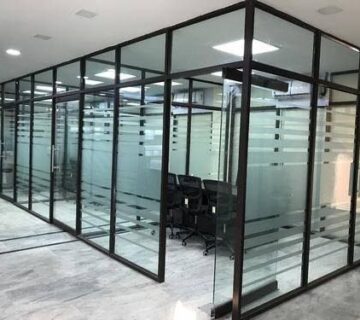
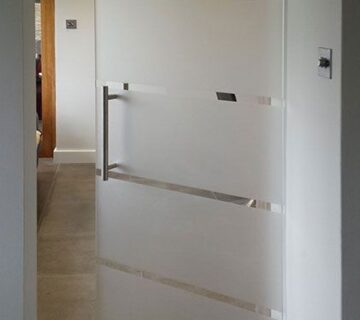
Shopfronts, mall entrances, office partitions, villa staircases and shower enclosures all place glass within reach of people moving at speed. Tempered glass is what makes those installations acceptable rather than hazardous.
Edge durability under constant cleaning
Dust means glass gets cleaned often in Kuwait. Tempered panels take repeated squeegee and cleaner contact without the gradual edge chipping that weakens annealed glass over years.
Thickness Guide by Application
- 6mm: Cabinet fronts, small mirrors, light shelving, picture glazing.
- 8mm: Shower enclosures in smaller openings, interior screens, standard table tops, smaller windows.
- 10mm: Frameless shower doors, residential frameless doors, interior glass partitions, larger glass table tops.
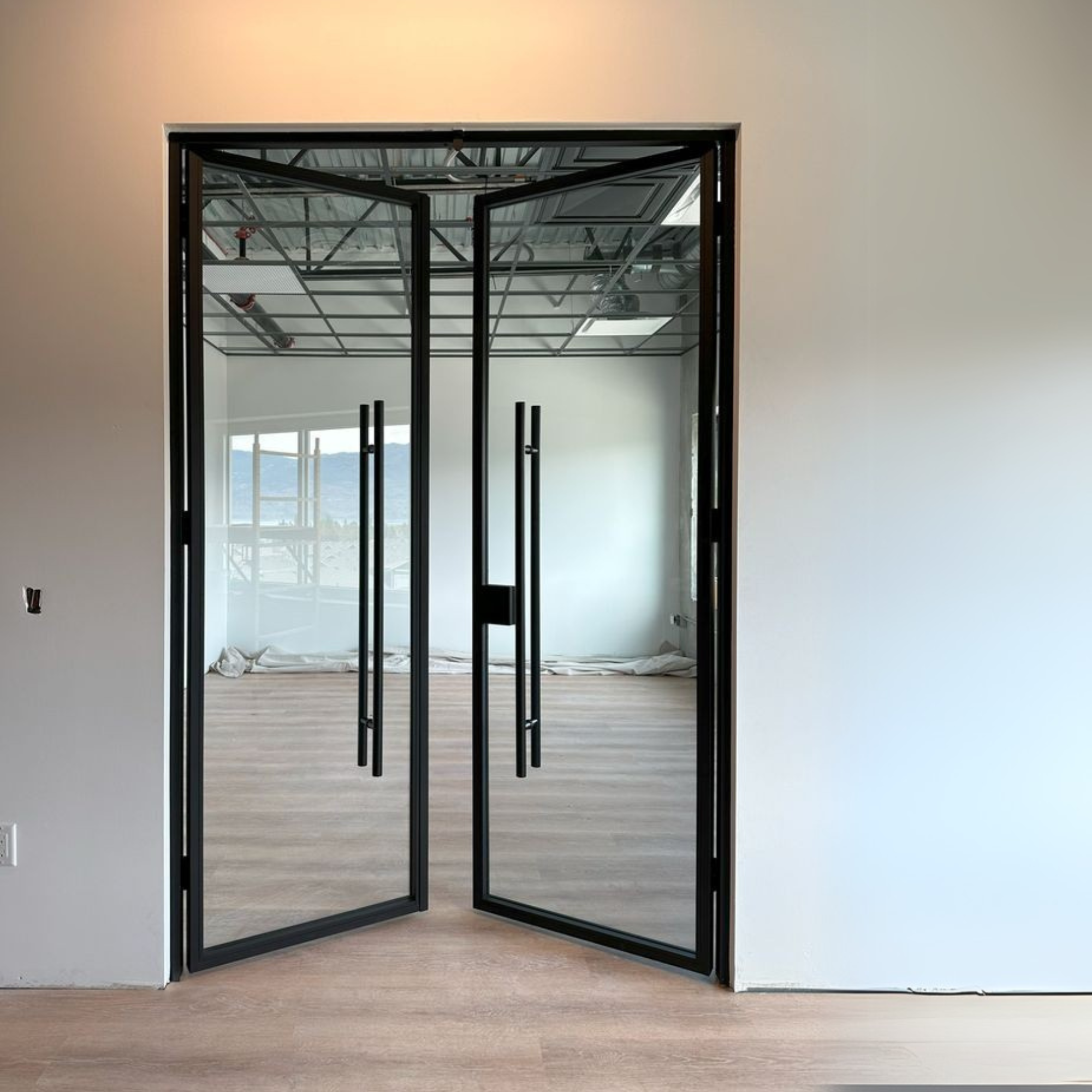
- 12mm: Commercial frameless entrance doors, shopfront glazing, large partitions, high-traffic openings.
- 15mm and above: Structural glazing and large-span facades — specified by engineering calculation, not rule of thumb.
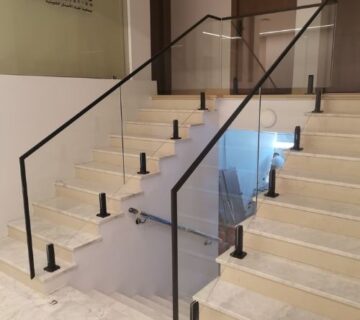
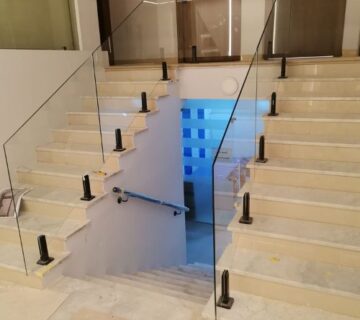
Where a fall is possible — balcony barriers, mezzanine edges, stair-side panels — laminated tempered glass is the correct specification rather than single tempered. It gives tempered strength, but the interlayer holds the fragments together if the panel breaks, so the barrier stays standing.
Panel Size: Ask Before You Design
Every fabricator has a maximum panel size, set by the dimensions of its cutting table and its tempering furnace. These are two different machines with two different limits, and the furnace is usually the binding constraint.
That matters at drawing stage rather than order stage. A single uninterrupted screen beyond the furnace size cannot be made — it has to be split into panels with a joint, which changes both the appearance and the hardware. Ask your supplier for their maximum tempered panel dimensions before the layout is fixed, not after.
What to Check Before Ordering in Kuwait
- Local tempering: A supplier who tempers locally can remake a panel in days. Imported units mean weeks of delay when something needs redoing — and with tempered glass, something eventually does.
- Their own survey: Because nothing can be corrected afterwards, the survey is the most important step in the process. It should be done by the supplier, on site, after finishes are complete.
- Certification: Ask what safety standard the glass is tempered to and request documentation. For commercial and public projects this is not optional.
- Edge finish: Polished, ground, bevelled or chamfered. On exposed frameless panels the edge is visible and it is where chips begin. Confirm the finish is in the quote.
- Fitting included: A supplier who fabricates but does not fit leaves you coordinating two trades on a panel that cannot be adjusted. One accountable party is safer.
Tempered Glass from Glass World
Glass World supplies, fabricates and installs tempered glass across Kuwait from our facility in Al-Rai — interior and exterior, residential and commercial. We survey on site, complete all cut-outs and edge work before tempering, and fit with our own teams.
The range covers clear and tinted float glass, laminated glass, insulated units, sandblasted and V-groove panels, mirrors, partitions and shapes cut to drawing.
Need tempered glass for a project in Kuwait? Contact Glass World for a site survey and quotation.
Frequently Asked Questions
What is the difference between tempered glass and toughened glass?
None — they are two names for the same product. “Toughened” is the common British and Gulf term, “tempered” the American one. In Kuwait it is also widely called “securit” glass.
Can tempered glass be cut to size after it is made?
No. Cutting, drilling or edge-working tempered glass shatters it. Every hole, cut-out and edge finish must be completed before the glass enters the tempering furnace, which is why accurate site measurement matters so much.
How much stronger is tempered glass than ordinary glass?
Substantially stronger than annealed glass of the same thickness against impact and bending load, and it tolerates far greater temperature differences across a pane. It also breaks safely, into blunt granules rather than sharp shards.
What thickness of tempered glass should I use?
6mm for cabinet fronts and small panels, 8mm for smaller shower enclosures and table tops, 10mm for frameless shower and interior doors, 12mm for commercial entrances and shopfronts. The right answer depends on panel size and hardware, so confirm it at survey.
Is tempered glass suitable for Kuwait’s summer?
Yes, and it is the sensible default. Tempered glass tolerates a much larger temperature differential across a single pane than annealed glass, which makes it far less prone to the thermal stress cracking that affects sun-facing windows here.
How long does a tempered glass order take?
Fitting is usually a single visit once the glass is on site. The longer part is fabrication after survey — cutting, edge work, drilling and the furnace run. Locally tempered glass is measured in days; imported glass in weeks.