Glass work is one of those trades where the material is only half the job. A perfectly specified panel fitted badly will rattle, leak, drop out of alignment, or sit proud of a wall that was never plumb to begin with. In Kuwait, where almost every opening involves tempered glass that cannot be adjusted once made, the fitting matters even more than usual.
This guide covers what glass installation actually involves, the difference between interior and exterior work, how the process runs from survey to handover, and what separates a competent installer from a cheap one.
What Glass Installation Covers
Interior work
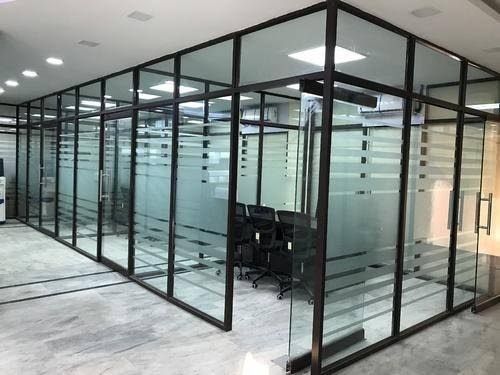
- Office partitions: Meeting rooms, manager cabins, reception screens and open-plan dividers, built from modular or frameless glass partition systems.
- Shower screens: Frameless, semi-frameless and framed shower enclosures — the most measurement-sensitive job in a domestic property.
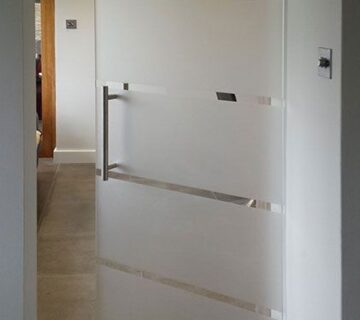
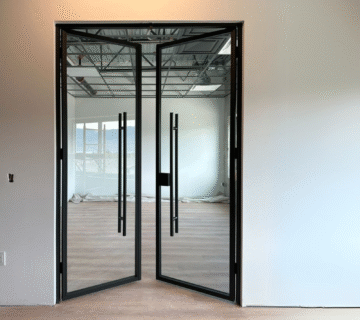
- Interior doors: Swing, sliding and pivot doors in tempered glass, with floor springs or patch fittings. Frameless and framed glass doors both suit interior openings.
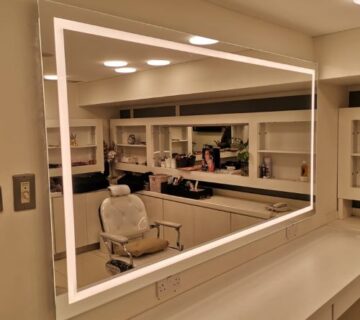
- Mirrors: Wall mirrors, wardrobe fronts, vanity mirrors and mirrored splashbacks, cut and finished to the opening. Decorative mirrors in silver, bronze, grey and antique finishes are all cut to order.
- Table and counter tops: Glass table tops, desk protectors, counter tops and shelving in tempered glass.
- Decorative glass work: Sandblasted, bevelled, V-groove and polished finishes applied to glass already specified for a job.
Exterior work
- Shopfronts and entrances: Shopfronts, showroom glazing and commercial entrances — usually 12mm tempered.
- Windows: Replacement glazing, insulated units and tinted or solar-control glass on sun-facing elevations.
- Feature glazing: Crystal clear low-iron glass where a large pane would otherwise show a green cast against pale stone or white render.
Interior and Exterior Are Not the Same Job
The glass may be similar but the engineering is not, and quotes that treat them identically are worth questioning.
- Load and exposure: An external panel carries wind load, takes the full solar cycle every day, and has to stay watertight. Sealant specification, movement allowance and drainage become structural concerns rather than finishing details. Internal glass carries its own weight and people leaning on it — demanding, but a different problem.
- Hardware grade: Exterior installations in Kuwait should use 316-grade stainless steel. Lower grades develop staining and pitting in the heat and humidity, and corroded fittings are replaced rather than cleaned. Interior work can use standard stainless or brass.
- Thermal movement: Long external runs expand and contract noticeably across Kuwait’s temperature range. Movement joints and correctly sized setting blocks are what stop the frame stressing the glass.
- Thermal performance: Exterior glazing is where insulated and solar-control specifications pay for themselves, because glass is usually the largest source of heat gain in the building envelope.
How the Process Runs
- 1. Site survey: Someone looks at the actual opening. For tempered glass this is the single most important step, because nothing can be cut or drilled after the furnace. Walls are checked for plumb, floors for level, and openings measured at several heights rather than once. The survey happens after tiling, flooring and ceiling finishes are complete — not from a drawing.
- 2. Specification and quotation: Glass type, thickness, edge finish, hardware and any privacy treatment are confirmed and priced. This is the moment to raise questions, because changes after fabrication mean a new panel.
- 3. Fabrication: The glass is cut to size, all holes and cut-outs are made, edges are worked, and the panel is tempered or laminated. Custom glass cutting to a drawing happens at this stage too. Local fabrication means days; imported glass means weeks.
- 4. Delivery and fitting: Panels are transported and fitted. Access, lift dimensions and stair turns matter more than people expect — a large panel that cannot get up the stairwell is a genuine site problem.
- 5. Adjustment and handover: Hinges and floor springs are adjusted, seals fitted, and the installation checked for alignment and operation. Sealant needs curing time before heavy cleaning.
What Separates a Good Installer
- One accountable party: A company that surveys, fabricates and fits is accountable for the whole chain. Split responsibility is where a wrongly sized panel becomes an argument instead of a remake.
- Local fabrication: Local tempering means a remade panel takes days. It also means someone can come back and adjust a floor spring six months later.
- Certification: For commercial and public work, ask what safety standard the glass meets and request documentation.
- After-sales response: A shopfront door that will not close costs a business money by the hour. Ask what the response time is before you need it.
- An itemised quote: A quote that lists glass, edge finish, hardware, delivery, fitting and disposal separately is a quote you can compare. A single number is not.
Questions Worth Asking Before You Commit
- Who does the measuring — your team or the contractor’s?
- Is the glass tempered locally or imported, and what is the lead time if a panel has to be remade?
- What is your maximum tempered panel size? (This decides whether a large screen needs a joint.)
- What grade of hardware is in the quote, and is it suitable for an exterior position?
- Is removal and disposal of the old glass included?
- What is covered under warranty — the glass, the hardware, or both?
- Who comes back if a hinge needs adjusting in six months?
Glass Installation from Glass World
Glass World is a glass services company based in Al-Rai, working across Kuwait on interior and exterior installations for homes, offices, shops, showrooms and commercial buildings. Our completed projects include villa and office fit-outs across the country.
We survey on site, fabricate locally, and install with our own teams — partitions, shopfronts, shower screens, doors, mirrors and table tops, in tempered, laminated, insulated, tinted and decorative finishes. Because we handle the whole chain, there is one party accountable from measurement to handover.
Planning glass work in Kuwait? Contact Glass World for a site survey and an itemised quotation.
Frequently Asked Questions
What does a glass installation service include?
A full service covers site survey and measurement, specification and quotation, fabrication of the glass including all cut-outs and edge work, delivery, fitting, and final adjustment of hardware. Removal and disposal of existing glass should also be confirmed as included.
Do I need to measure the opening myself?
No, and you should not. Tempered glass cannot be adjusted after fabrication, so the measurement has to be taken by the people responsible for the result. A professional survey checks plumb and level at several points rather than taking a single dimension.
How long does glass installation take in Kuwait?
Fitting itself is usually completed within a day for a single door, screen or mirror. The longer part is fabrication after survey, which depends on glass type — locally tempered glass is measured in days, imported glass in weeks.
What is the difference between interior and exterior glass installation?
Exterior work has to handle wind load, the full solar cycle, thermal movement and water. It needs higher-grade hardware (316 stainless in Kuwait’s climate), movement allowance and proper sealing. Interior work is less exposed but often more demanding on finish and alignment.
When should the survey happen in a renovation?
After tiling, flooring and ceiling finishes are complete. Measuring from a drawing or before finishes go in is the most common cause of a panel that does not fit, and with tempered glass that means a remake rather than an adjustment.
Do you work with contractors and interior designers?
Yes. Glass World works directly with fit-out contractors, interior designers and end clients on both residential and commercial projects across Kuwait.